Because they have a complex life cycle, raising fireflies is very difficult. To get from egg to adult, you will need to work out conditions that promote survival not just for the eggs, but also the larval and pupal stages. So far, scientists have been able to successfully rear just a few Asian firefly species (Luciola cruciata, Aquatica lateralis, and Aquaticaficta), all with aquatic larval stages.
Many people (including myself, Jim Lloyd, Lynn Faust and Larry Buschman) have tried to raise U.S. fireflies – all of which have terrestrial larvae – but without much success. If you find a mated female, it’s generally easy to get her to lay her eggs on moss. With luck, within a few weeks the eggs will successfully hatch out into tiny larvae. They’re cute and hungry! But the next step is extremely difficult: getting these larvae to eat, grow, and survive for the many months it takes before they’re big enough to pupate.
Although I’ve tried several different species, I’ve never gotten any of these terrestrial larvae to survive longer than 2-3 months. I’ve tried feeding them earthworms, snails, cat food (both wet and dry), and never gotten survival rates above 1%. So, as I recommend in Silent Sparks: Stepping Out, the best thing is to return any newly-hatched firefly larvae to their original habitat, where they’ll likely have a better chance of survival.
At 6 weeks, only 1% of these Ellychnia larvae still survived.
If you’re still determined to give it a try, Terry Lynch’s Firefly Notebooks provide a lot of useful information; Terry also describes his techniques for rearing Photinus larvae here.
Update April 2017: Exciting news – Dr. Scott Smedley at Trinity College, Hartford CT has successfully raised Pyractomena borealis fireflies for two generations! Stay tuned for more details about the rearing techniques he & his students have developed.
Many years ago, my brothers, friends and I ventured out almost every hot summer night into the wilds of Haynes Park in Wilmington, Delaware. Our mission was capturing fireflies for a neighbor, a DuPont chemist who helped crack the code of chemoluminescence that would eventually lead to glowsticks. The adults in the neighborhood affectionately called us “the firefly kids” but we considered ourselves “science adventurers” as we explored the wilds of our neighborhood city park.
The park was aglow almost every night. We came to know every square inch of it, and also managed to find every poison ivy plant, discover every knee-skinning rock and get bitten by every mosquito. But we were supremely happy and we captured lots of fireflies. Even at such a young age, we were fascinated by their cold light, and tested whether their light gave off any heat by placing the bugs on our tongues. We had no fear because those lightningbugs were our friends and companions. Continue reading →
In the firefly life cycle, the adults we see flying around us represent just the tip of the iceberg. Adult fireflies only live for a few weeks, but they spend up to two years in a juvenile larval stage. We don’t see much of them during this time because they live underground (or underwater, in certain species).
During this larval stage baby fireflies concentrate on gluttony and growth, feasting on earthworms, snails, and whatever other soft-bodied prey they can find. They are small but fearsome predators, using their hollow, sickle-shaped jaws to inject their prey with paralyzing neurotoxins. Then they secrete digestive enzymes to liquify and ingest the prey while it’s still alive. Continue reading →
Here are a few simple ways to attract your local fireflies (from Silent Sparks Chapter 8):
Create an inviting habitat
Let the grass in part of your lawn grow longer by mowing it less frequently. This will help the soil hold more moisture.
Leave some leaf litter and woody debris in parts of your yard – this makes good habitat for larval fireflies.
Fireflies need moist places to lay their eggs, so preserve any wetlands, streams, or ponds in your neighborhood.
Bring back the night
When installing or re-thinking your outdoor lighting, use only what you need to get the job done.
Use Dark-Sky compliant, shielded lighting fixtures; these direct light downward, where it’s most useful for safety and security. Use bulbs as low-wattage as possible to provide just the light you need.
Turn off outdoor lights when they’re not needed, or put them on timers or motion sensors.
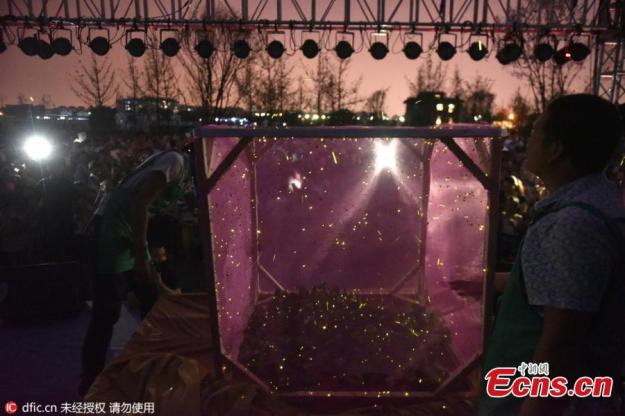
By all reports, Chinese fireflies seem to be increasingly at risk from overharvesting. Last week, North First Park in Chengdu, China captured and released 100,000 fireflies to entertain visitors. The story, reported by Mao Yuting & Wu Xiaochuan in the Taiwanese press, is translated below:
Chengdu park releases 100,000 fireflies: Expert says all will die within the week
“On the evening of June 25th, a firefly release event attracted many visitors to Chengdu North First Park. According to the event host, a total of 100,000 fireflies were released. At the scene, workers opened up a large glass box and fireflies flew out in unison, inciting great excitement among spectators. Some fireflies flew up, covering an area of the night sky with flickering green stars; some landed on the ground, where several children stooped to pick them up. More than a few spectators caught fireflies mid-flight and put them in bottles.
The following day, Director Zhao Li of the Huaxi Insectarium expressed his firm disapproval. According to the director, all of the 100,000 fireflies released will die within three to seven days. Fireflies have highly specific habitat requirements, and are unlikely to survive away from their native environment. Even if overall conditions are good, the new habitat should be tailored to address their needs, and an extended period of acclimation allowed. If nothing is done before the fireflies are released, the death rate will approach 100%.
July 2016: When Japanese fireflies were loved nearly to death – Aeon Magazine
Night workers: How evolution drives the firefly dance – The Guardian
Reviews now rolling in:
“Prepare to be dazzled and amazed.” – Eric Eaton, author of Kaufman Field Guide to Insects of North America
“What makes Silent Sparks catch fire is Lewis’s breathtaking ability to channel her inner Rachel Carson and bring that ‘sense of wonder’ to the table as the author delves into all things Lampyridae.”-Bruce Fellman, Kent County Daily Times
Nature – “a nocturnal wonder of nature…an illuminating peek into a fascinating corner of field biology.”
Examiner.com – In “this absorbing book … a wealth of easily-assimilated, sometimes jaw-dropping information on the mysterious world of fireflies…gleams brightly from every page.” Harvard Magazine – This “informed, enthusiastic guide to ‘the best-loved insects on Earth’ is reason enough to look forward to summer nights.”
Washington Post – Lewis “tells… icky tales with glee” but then presents “the radiantly appealing aspects of the firefly world… It’s all pretty amazing.”
Friends & Neighbors:
“Your book totally changed the way I look at our backyard fireflies.” Tyler D.
“Silent Sparks just opened a new world for me…thank you for sharing your umwelt.” Kristy F.
“I’ve been waiting for this book for so long! Fireflies are my favorite insects and I enjoy watching them and learning more about their fascinating lives. there have not been any good references to really explain what i’ve been seeing after dark so I’m glad to have this new information. I got two copies and will buy more for Christmas gifts.” Southern Movie Buff (on Amazon)
Early reviews:
“With stunning illustrations and accessible text … this book brings new awe to the flashing spectacle and love song of fireflies.” – Bernd Heinrich, author of Winter World, Mind of the Raven, and Life Everlasting
“a beautifully written ode to fireflies and their behavior by someone who has made major research discoveries about these fascinating creatures … a book everyone can enjoy.” – John Alcock, author of Animal Behavior: An Evolutionary Approach and When the Rains Come: A Naturalist’s Year in the Sonoran Desert
“rewarding on so many fronts… an enjoyable, informative tour into the lives of fireflies.” – Doug Emlen, author of Animal Weapons and Evolution: Making Sense of Life
“Silent Sparks makes you want to drop whatever you’re doing and devote yourself to learning everything you can about the charismatic, even enlightening, firefly…whose dramatic lives are revealed with humor, insight, and passion.” – Marlene Zuk, author of Paleofantasy,Sex on Six Legs and Riddled with Life
“exudes the curiosity and sheer joy that comes from exploring and celebrating the science of life… this marvelous book reveals a world of wonder that will leave readers breathless with awe.” – Wade Davis, National Geographic Explorer-in-Residence
Wait…what? For many years, scientists believed that lightningbug fireflies (the flashy kinds) only lived east of the Rocky Mountains. But now scattered populations of these flashers are popping up in western states, too.
Seth Bybee at Brigham Young University discovered Pyractomena lightningbugs at several locales in Utah, mainly in wet places around seeps and springs.
Using citizen scientist reports, Dr. Bybee and the Natural History Museum of Utah compiled this map showing 100+ locations all over Utah where folks have spotted lightningbugs. Flashing fireflies also been reported from Great Basin National Park in Nevada.
So if you’re living or traveling out West, keep your eyes wide open for fireflies and send in your reports here!
In our family lore, we have a lightning bug love story that happened some 70+ years ago. One night, when my Mom & Dad were still teenagers, they were out walking and my Dad caught a lightning bug. He used its lantern to trace a glowing line around my mother’s ring finger. Then he vowed “Here’s the first of many rings to prove how much I love you.”
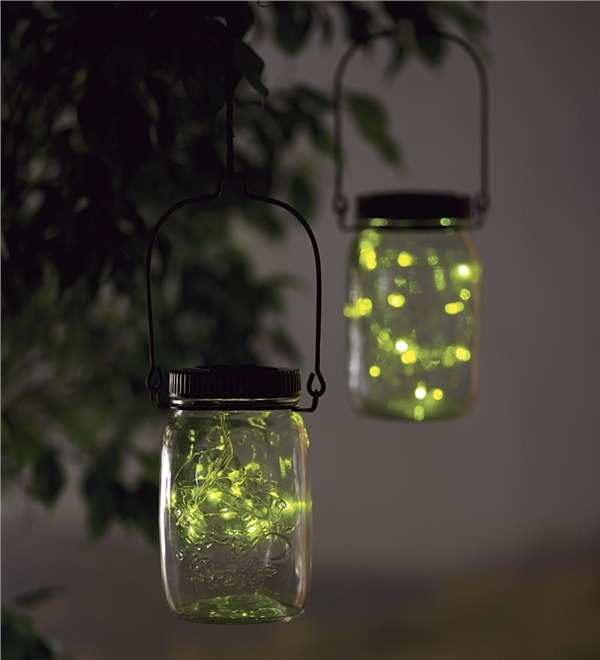
To celebrate their 60th wedding anniversary, we filled the hall with jars of firefly lights – for our family, fireflies will always go hand-in-hand with romance.
Thrilled to announce that the Firefly Genome Project will soon start deciphering the genetic blueprint of the U.S. Big Dipper firefly, Photinus pyralis!
More than 80 people from many different countries helped us crowdfund this path-breaking scientific initiative by contributing & by spreading the word – thanks to all!
And another great thing is that we’ll be providing open access to the DNA sequence data, which we hope will inspire lots more exciting firefly science in the future.
You can learn more about the goals & progress of this collaborative project at Experiment.com.
For the past few years, online sales of live fireflies have skyrocketed just before Qixi, the Chinese equivalent of Valentine’s Day. For many young Chinese, a jar of fireflies looks like a brilliant way to say “I love you.”
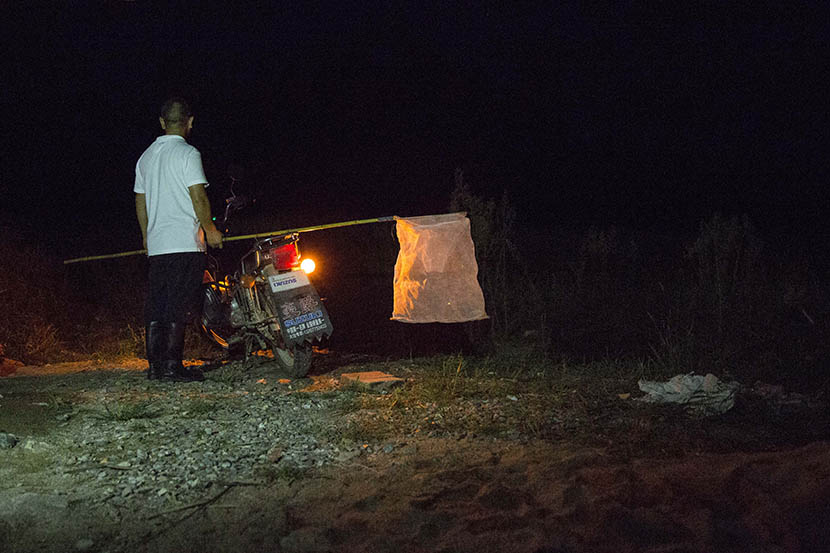
According to reports, more than 10 million Chinese fireflies were sold online in 2015, a tenfold rise compared with the same period the previous year. Costing a few hundred yuan, each container holds 30-50 fireflies, most likely collected from the wild. But it makes a short-lived gift, because once they’re in captivity these fireflies will only survive a few days. Continue reading →



 In our family lore, we have a lightning bug love story that happened some 70+ years ago. One night, when my Mom & Dad were still teenagers, they were out walking and my Dad caught a lightning bug. He used its lantern to trace a glowing line around my mother’s ring finger. Then he vowed “Here’s the first of many rings to prove how much I love you.”
 Silent Sparks