Poisons ☠️, Pumps ⛽️, and Vampire Fireflies 🔥🪰🧛🏼‍♀️

One summer when he was about six, my nephew Nate got totally traumatized by fireflies. Delighted at first sight, he skipped and jumped as they lit up our field, collecting a dozen or so in a mason jar. That night he fell asleep happy, mesmerized by the soft glow from his bedside jar.

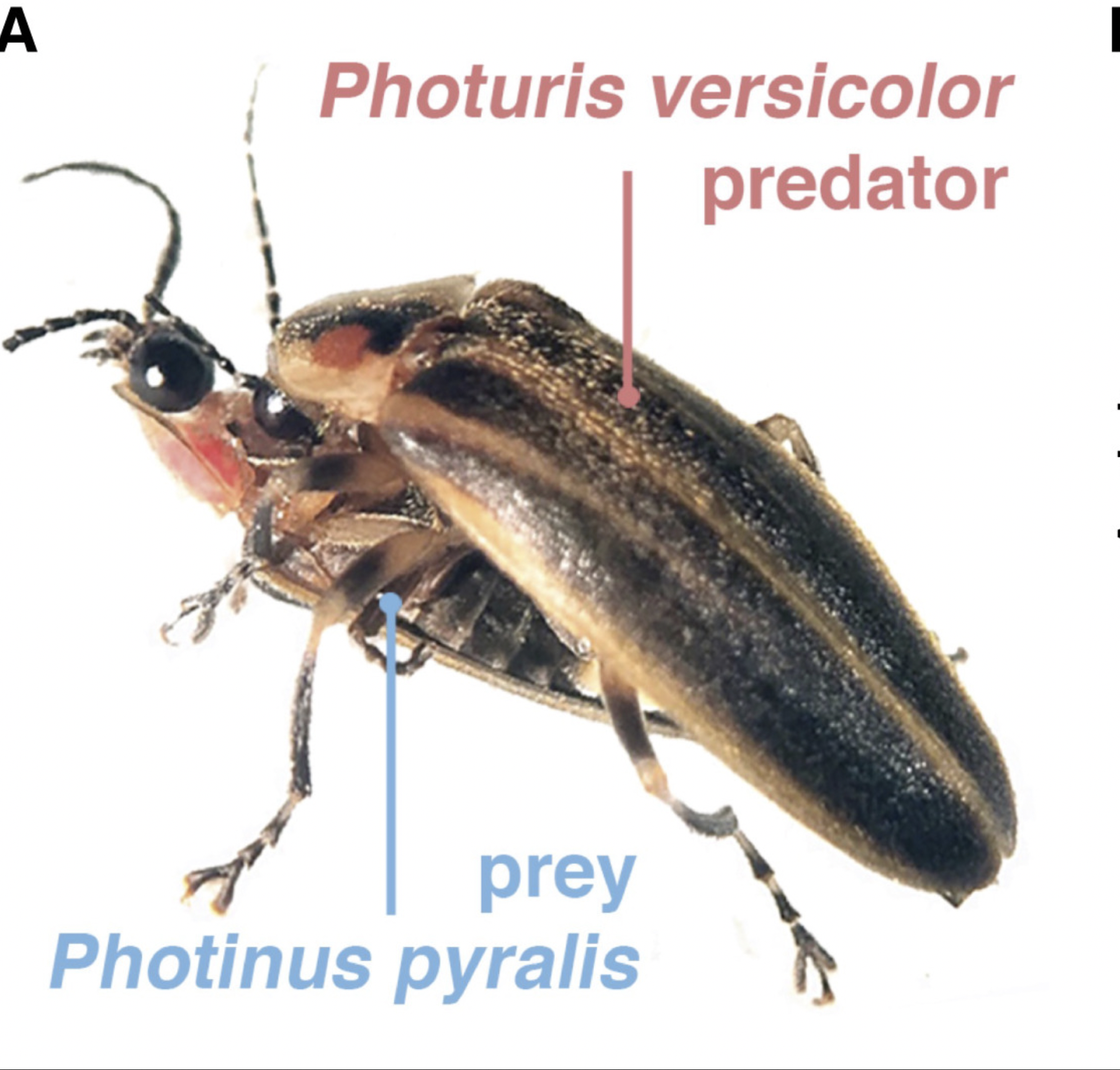
But next morning we awoke to terrified screams of “Help, come quick!” Peering into the jar, we recognized a gory scene: all that remained of last night’s collection was a single firefly – it was a really big Photuris female – and she was busy sinking her mandibles into the neck of a hapless Photinus male. Still alive (barely), he was the last survivor; all that remained of the other captive fireflies were bits and pieces scattered on the bottom of the jar.

Blueberry pancakes soothed, but these firefly vampires made a lasting impression on Nate. You too can watch some gory action at the end of this KQED Deep Look video:

In general, fireflies don’t eat during their short adulthoods (instead, they pig out as juveniles). But the females of certain Photuris fireflies have evolved into voracious predators that are highly specialized to consume other firefly species. Nate had accidentally captured one of these vampire fireflies, and she had easy pickings in his mason jar.

In the wild, predatory Photuris females use several tricks to snag a firefly meal. They’re nicknamed femmes fatales because they often lure males by mimicking the courtship flashes given by females of their intended prey. They also pursue and attack flying males, and deftly steal trapped and wrapped fireflies from spiders’ webs (read more about this thieves-in-the-night strategy here).
Obviously insects don’t like to get eaten. Many gain protection by being toxic. If you’ve ever tasted a firefly (I do not recommend this! link), you’ll know they taste awful. And that’s because they contain defensive toxins called lucibufagins (loo-sa-boo-fa-jins).

We’ve known for about 50 years that Photinus fireflies manufacture lucibufagins, and these are very effective at deterring most insect-eaters. It’s also been known for decades that predatory Photuris fireflies resort to hunting and eating other fireflies because they’re unable to manufacture lucibufagins on their own.

But many mysteries remain! A big challenge has been figuring about how fireflies – this includes both the prey and the predator – avoid getting poisoned by their own toxins or the toxins they ingest. Recent work suggests the answer revolves around a piece of cellular machinery called the sodium-potassium pump. Lucibufagins and related toxins (generically known as cardiotonic steroids) kill predators by messing with an essential piece of cellular machinery. It’s a tiny molecule called the sodium-potassium pump. You, me, and every other animal rely on millions of these sodium-potassium pumps (NaK pumps) to think, contract our muscles and send signals along our nerves.
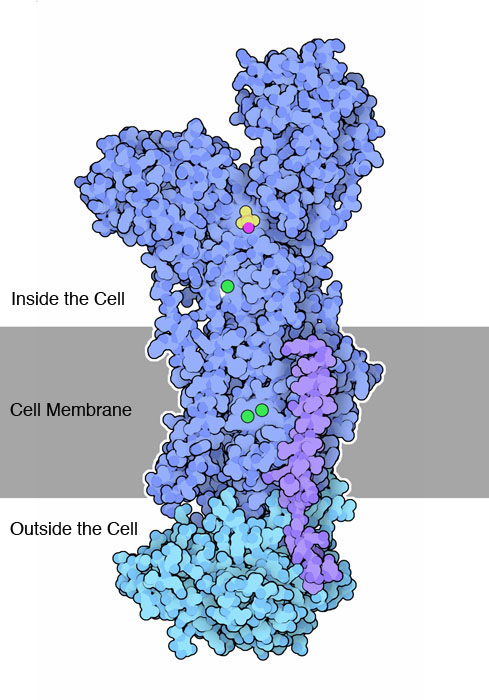
Tiny but mighty, sodium (Na)-potassium (K) pumps allow brains to think, nerves to signal, and muscles to contract.

(NaK Pump image by David Goodsell)

In a study published December 2023 in the journal Current Biology, Lu Yang and her colleagues discovered that predator fireflies and their firefly prey have evolved very different toxin resistance strategies.

Most toxin-producing fireflies contain a single, tweaked version of the NaK pump that enable them to avoid self-poisoning. In Photinus and other prey fireflies, this resistance depends on a single mutation in the toxin-binding part of the NaK pump that sits outside the cell membrane that swaps out one amino acid for another (isoleucine gets substituted for the alanine that normally sits at position 119 in the protein).

But more elaborate modifications show up in the NaK pump genes of predatory Photuris fireflies, and these apparently help them deal with toxins ingested from their prey. Photuris fireflies carry multiple gene copies that encode several different versions of the NaK pump – some versions are sensitive to toxins, while others are more resistant. The most resistant versions of their NaK pumps (ATP⍺1C and D) are expressed in the digestive tract of predatory females, the infamous femmes fatales.

Predatory Photuris fireflies carry multiple gene copies that encode several different versions of the NaK pump (ATP⍺1A-D), while Photinus prey have expres a single version expressed everywhere.

(from Yang et al 2023)

The authors conclude that confronted with distinct physiological challenges of manufacturing their own toxins vs. ingesting and sequestering them from prey, Photinus and Photuris evolved very different strategies to reduce toxic effects on NaK pumps in their own tissues.

Photinus manufacture their own toxins and express a single, highly resistant NaK pump throughout their bodies to avoid getting poisoned. But predatory Photuris fireflies have evolved multiple gene copies that encode different versions of the NaK pump – some more resistant, others less so – together with tissue-specific expression patterns that allow them to safely hijack and sequester toxins produced by other fireflies.

References (caution, possible paywalls)

Lu Yang, Flora Borne, Anja Betz, Peter Andolfatto et al. 2023. Predatory fireflies and their toxic firefly prey have evolved distinct toxin resistance strategies. Current Biology vol 33, pages 5160-68. https://doi.org/10.1016/j.cub.2023.10.063

Lynn Faust, Raphaël de Cock, and Sara Lewis. 2012. Thieves in the night: Kleptoparasitism by fireflies in the genus Photuris (Coleoptera: Lampyridae). The Coleopterists Bulletin Volume 66, pages 1-6. https://doi.org/10.1649/072.066.0101

Art 🎨 + Science 🔬= 💚 ✨

A wonderful gateway bug, fireflies help raise awareness about insect conservation

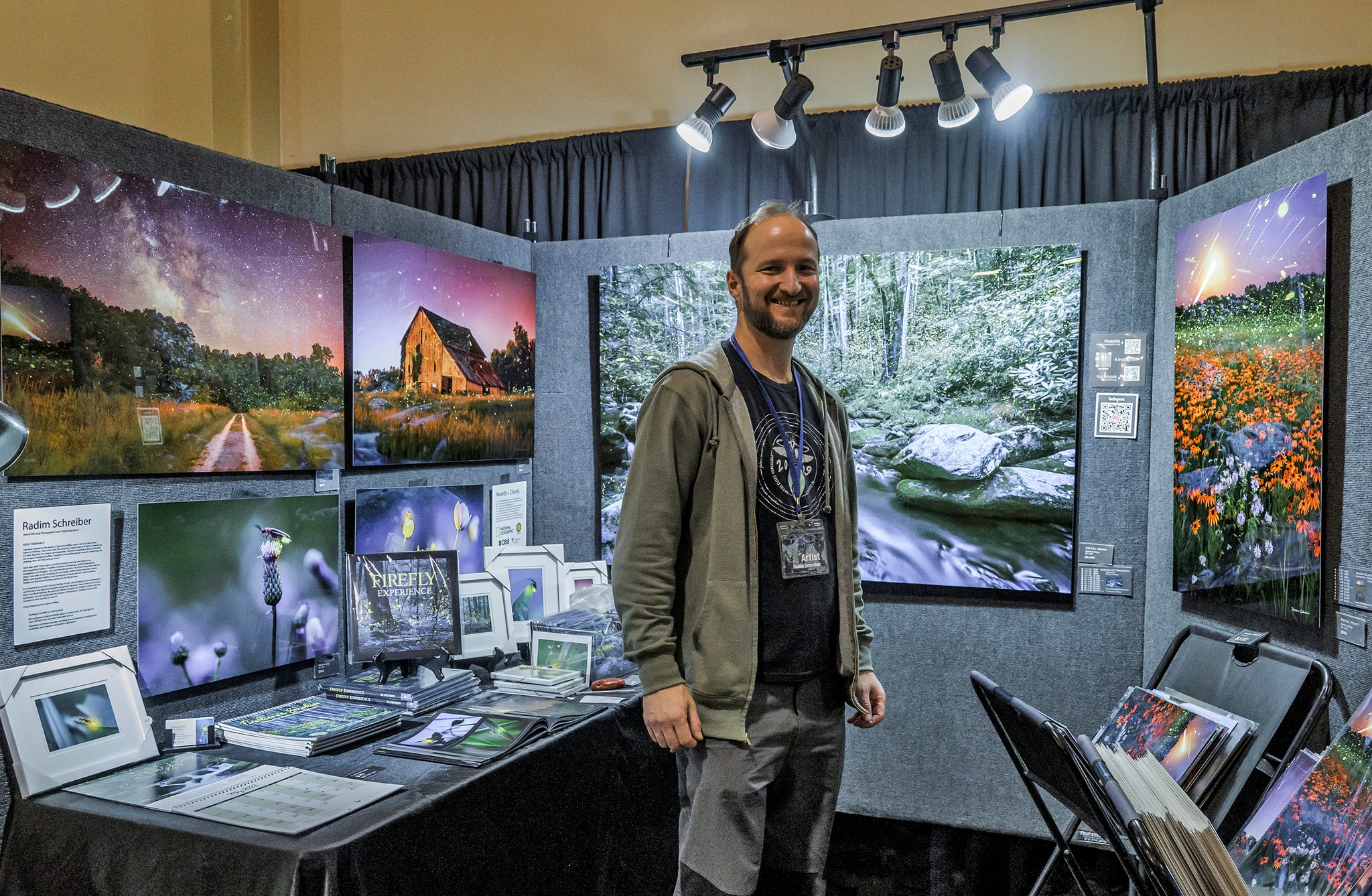
In our recent work to protect fireflies worldwide, we have worked together with skilled artists, musicians, and photographers. Their stunning pictures and beautiful compositions capture the enchantment of fireflies in a way that words alone cannot. You can learn more about these magical collaborations in an article published last month in PNAS. Link

  • May 16 – New Canaan Land Trust, CT: Firefly talk & walk
  • September 8 – Henry Ferguson Museum, CT
  • May 9 – Prairie Research Institute/U. Illinois Campaign-Urbana
  • May 2 – Texas Master Gardeners, Keynote presentation
Screen Shot 2023-05-25 at 7.52.54 PM
  • April 27– Environmental Studies Program @ Tufts University, Protecting the Jewels of the Night: Firefly Life, Sex & Death
  • March 23 – Master Gardeners, Ohio State
  • April – In Defense of Plants Podcast: Fireflies & Plants
indefense
  • April 11– Iowa State Entomologists
  • April 19 – What Matters to Me, Tufts University Alumni
  • June 8 @ 7 pm ET, Manship Artists Residency, Gloucester Massachusetts
  • June 16 – Conservation Keynote at 2022 International Firefly Symposium, Gaia, Portugalslide again
  • July 22Firefly Conservation: Opportunities and Challenges invited speaker at Fireflies, Ecology, and Environment webinar hosted by EMPRI (Environmental Management & Policy Research Institute), Bengaluru, India
  • October 20Firefly Conservation- Preserving the Jewels of the Night @ the Appalachian Mountain Club’s See the Dark Festival, Mediwisa Lodge, Greenville Maine
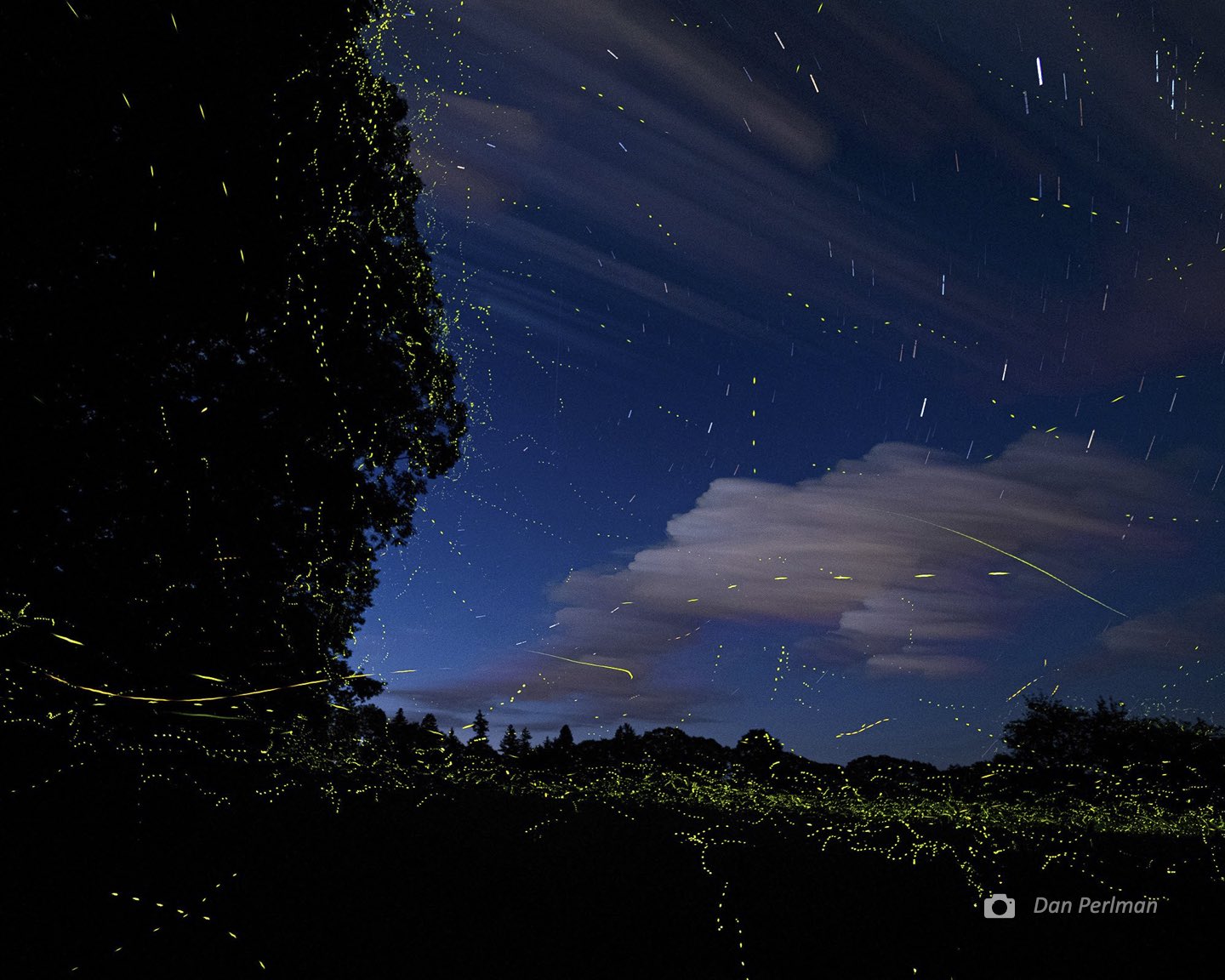
Only fireflies and stars light up the night in Maine’s famed 100-Mile Wilderness (photo by Dan Perlman)

2021 Events

  • February – The Show about Science Podcast: Firebeetles!
  • April 13 – Rochester Academy of Science
  • July 1 – The Wondrous World of Fireflies hosted by The Xerces Society
  • July 3 & 4 – World Firefly Day 2021 (Fireflyers International’s YouTube channel)
  • July 5 – Earth Matters podcast, Business Radio BFM 89.9, Malaysia
  • July 23 – Festival de las Luciérnagas México, nanosapiens Facebook live)
  • July – Atlas Obscura podcast
  • August –  ologies with Alie Ward podcast: Sparklebutt-ology!

2020 Events

Screen Shot 2020-10-29 at 10.59.28 AM
  • October 8 – Species in Peril Webinar: Flora, Fishes, and Fireflies. 7:30 – 9:00 pm EST, hosted by New Mexico BioPark Society & University of New Mexico. Free, registration required.
25y ICBBB poster

2019 Events

Linnean Soc NY
  • July 16Firefly Ecology & Conservation – Malaysia Nature Society,  Kuala Lumpur
  • July 17The Wondrous World of Fireflies – Kampang Kuantan Firefly Park, Malaysia
66483484_2434628119892001_5158799486830510080_n
  • September 21 – 2019 Bugfest! @ North Carolina Museum of Natural Sciences, Raleigh. Daily Planet Theater 1:30 pmmuseum_facade-1October 6 –  International Union for the Conservation of Nature (IUCN) Group Leaders Meeting, Abu Dhabi.

2018 Events

2017 Events

  • April 23 – Keynote address at International Firefly Symposium, Taipei Taiwan
IMG_2578
  • May 2 – Firefly talk, Okinawa Japan
  • May 11 – First Annual Charles E. Roth Lecture, Concord Massachusetts
  • June 16  – Arc of Appalachia Firefly Talk & Walk, Cincinnati Friends Meeting House & Grounds, Ohio
  • June 17 –  Firefly Talk @ Paxton Theater, followed by dinner & firefly viewing @ Arc of Appalachia’s Highlands Nature Sanctuary, Bainbridge Ohio
  • June 21 –  Talk & Walk, 5th Annual PA Firefly Festival, Kellettville PA
  • July 23 Firefly Talk & Walk, Lincoln Land Conservation Trust, MA
  • July 29 Silent Sparks Talk & Firefly hike, Northwest Park & Nature Center Windsor CT

2016 Events & Firefly Walks

  • May 22 – Banquet address at International NO Scientific Conference, Sendai Japan
  • May 26 – Firefly talk, Kyoto Japan
  • June 12 – Boston Museum of Science, Current Science & Technology Stage – Firefly Chat with Don Salvatore @ 12.30, Firefly Talk @ 2.30 pm
  • June 13 – Harvard Arnold Arboretum, Boston MA — Firefly Talk & Book-signing  @ 7 pm,  followed by Firefly Walk @ 8.30 (with special guest Don Salvatore of Firefly Watch)
  • June 28 – Brooklyn Bird Club, NYC: Firefly Talk  & Book-signing @ 7 pm @ Brooklyn Public Library, followed by Firefly Walk in Prospect Park
  • July 15 – Harvard Book Store, Cambridge MA @ 7 pm
  • August 4 – OMSI Science Pub, McMenamins Mission Theater,  Portland OR @ 7 pm
slide again

2021 Events

  • April 13 – Rochester Academy of Science
  • July 1 – The Wondrous World of Fireflies hosted by The Xerces Society
  • July 3 & 4 – World Firefly Day 2021 (Fireflyers International’s YouTube channel)
  • July 5 – Earth Matters podcast, Business Radio BFM 89.9, Malaysia
  • July 23 – Festival de las Luciérnagas México, nanosapiens Facebook live)
  • July – Atlas Obscura podcast
  • August –  ologies with Alie Ward podcast: Sparklebutt-ology!

2020 Events

  • October 8 – Species in Peril Webinar: Flora, Fishes, and Fireflies. 7:30 – 9:00 pm EST, hosted by New Mexico BioPark Society & University of New Mexico. Free, registration required.
Screen Shot 2020-10-29 at 10.59.28 AM
25y ICBBB poster

2019 Events

  • July 16Firefly Ecology & Conservation – Malaysia Nature Society,  Kuala Lumpur
  • July 17The Wondrous World of Fireflies – Kampang Kuantan Firefly Park, Malaysia
66483484_2434628119892001_5158799486830510080_n
  • September 21 – 2019 Bugfest! @ North Carolina Museum of Natural Sciences,Raleigh. Daily Planet Theater 1:30 pmmuseum_facade-1
  • October 6 –  International Union for the Conservation of Nature (IUCN) Group Leaders Meeting, Abu Dhabi.

2018 Events

  • February 13Bright Lights & Bling @ Cambridge Entomological Club

CEC poster DK[3]

2017 Events

  • April 23 – Keynote address at International Firefly Symposium, Taipei Taiwan
IMG_2578
  • May 2 – Firefly talk, Okinawa Japan
  • May 11 – First Annual Charles E. Roth Lecture, Concord Massachusetts
  • June 16  – Arc of Appalachia Firefly Talk & Walk, Cincinnati Friends Meeting House & Grounds, Ohio
  • June 17 –  Firefly Talk @ Paxton Theater, followed by dinner & firefly viewing @ Arc of Appalachia’s Highlands Nature Sanctuary, Bainbridge Ohio
  • June 21 –  Talk & Walk, 5th Annual PA Firefly Festival, Kellettville PA
  • July 23 Firefly Talk & Walk, Lincoln Land Conservation Trust, MA
  • July 29 Silent Sparks Talk & Firefly hike, Northwest Park & Nature Center Windsor CT

2016 Events & Firefly Walks

  • May 22 – Banquet address at International NO Scientific Conference, Sendai Japan
  • May 26 – Firefly talk, Kyoto Japan
  • June 12 – Boston Museum of Science, Current Science & Technology Stage – Firefly Chat with Don Salvatore @ 12.30, Firefly Talk @ 2.30 pm
  • June 13 – Harvard Arnold Arboretum, Boston MA — Firefly Talk & Book-signing  @ 7 pm,  followed by Firefly Walk @ 8.30 (with special guest Don Salvatore of Firefly Watch)
  • June 28 – Brooklyn Bird Club, NYC: Firefly Talk  & Book-signing @ 7 pm @ Brooklyn Public Library, followed by Firefly Walk in Prospect Park
  • July 15 – Harvard Book Store, Cambridge MA @ 7 pm
  • August 4 – OMSI Science Pub, McMenamins Mission Theater,  Portland OR @ 7 pm

Firefly tourism sparks wonder and concern

Fireflies (beetles in the family Lampyridae) include about 2,200 species worldwide, with breathtaking luminous displays that make them one of our most charismatic mini-fauna. So no surprise that their popularity has been skyrocketing lately in countries like India, Mexico, Taiwan, Malaysia, and the United States. In a 2021 review, we estimated that about a million tourists visit firefly-watching sites spread across 12+ countries during a typical year!

For fireflies to thrive, we’ll need to protect the habitats needed by all their life stages.

I’m absolutely thrilled that so many people are stepping into the night to experience the sheer wonder of these dazzling creatures! And tourism can certainly be a boon, creating jobs and providing revenue for local communities.

Yet there’s a dark side to fireflies’ popularity. Confronted with rapidly growing visitor numbers, the stars of the show are often subjected to trampling, disturbance of larval and adult habitat, and light pollution.

Promoting sustainable firefly tourism in the U.S.

More than 150 different firefly species are sprinkled across the United States, including several whose mating displays have grown into seasonal tourist attractions. These include the synchronously flashing Photinus carolinus and Photuris frontalis fireflies, along with many others that put on remarkable light shows.

In April 2021, The Xerces Society hosted the first-ever U.S. firefly tourism charette, a virtual meeting of park managers, tour guides, event planners, and firefly experts. We discussed the many challenges of managing thousands of visitors while still protecting local firefly populations, and came up with guidelines for site managers and tourists.

Aimed at moving U.S. firefly tourism toward greater sustainability, these guidelines are now available on the Xerces website, including:

So enjoy the show, remember to step lightly & keep it dark!

Curious to learn more?

Click here for more info at The Xerces Society, including a map of popular U.S. firefly tourist sites.

Read our 2021 article in Conservation Science & Practice: Firefly tourism: Advancing a global phenomenon toward a brighter future (news story here & here).