Category Archives: Blog

Conspiring to be part of the ✨magic ✨!

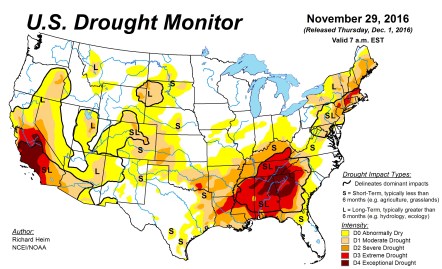
How does drought impact fireflies?

Fireflies need moisture during all of their life stages, especially their eggs and their long-lasting larval stage. Firefly larvae in the U.S. live in either soil or rotting wood, and this juvenile stage lasts up to 2 years in temperate latitudes.

US Drought Map Nov 2016

Dry conditions mean fewer fireflies in future years.

Continue reading

Can I raise fireflies?

Because they have a complex life cycle, raising fireflies is very difficult. To get from egg to adult, you will need to work out conditions that promote survival not just for the eggs, but also the larval and pupal stages. So far, scientists have been able to successfully rear just a few Asian firefly species (Luciola cruciata, Aquatica lateralis, and Aquatica ficta), all with aquatic larval stages.

Many people (including myself, Jim Lloyd, Lynn Faust and Larry Buschman) have tried to raise U.S. fireflies  – all of which have terrestrial larvae – but without much success. If you find a mated female, it’s generally easy to get her to lay her eggs on moss. With luck, within a few weeks the eggs will successfully hatch out into tiny larvae. They’re cute and hungry! But the next step is extremely difficult: getting these larvae to eat, grow, and survive for the many months it takes before they’re big enough to pupate.

Although I’ve tried several different species, I’ve never gotten any of these terrestrial larvae to survive longer than 2-3 months. I’ve tried feeding them earthworms, snails, cat food (both wet and dry), and never gotten survival rates above 1%. So, as I recommend in Silent Sparks: Stepping Out, the best thing is to return any newly-hatched firefly larvae to their original habitat, where they’ll likely have a better chance of survival.

6 w share earthworm bit

At 6 weeks, only 1% of these Ellychnia larvae still survived.

If you’re still determined to give it a try, Terry Lynch’s Firefly Notebooks provide a lot of useful information; Terry also describes his techniques for rearing Photinus larvae here.

Update April 2017Exciting news – Dr. Scott Smedley at Trinity College, Hartford CT has successfully raised Pyractomena borealis fireflies for two generations! Stay tuned for more details about the rearing techniques he & his students have developed. 



Baby Fireflies @ Work

In the firefly life cycle, the adults we see flying around us represent just the tip of the iceberg. Adult fireflies only  live for a few weeks, but they spend up to two years in a juvenile larval stage. We don’t see much of them during this time because they live underground (or underwater, in certain species).baby firefly

During this larval stage baby fireflies concentrate on gluttony and growth, feasting on earthworms, snails, and whatever other soft-bodied prey they can find. They are small but fearsome predators, using their hollow, sickle-shaped jaws to inject their prey with paralyzing neurotoxins. Then they secrete digestive enzymes to liquify and ingest the prey while it’s still alive. Continue reading

How Can I Make My Yard More Firefly-Friendly?

Here are a few simple ways to attract your local fireflies (from Silent Sparks Chapter 8):

Create an inviting habitat

  • Let the grass in part of your lawn grow longer by mowing it less frequently. This will help the soil hold more moisture.
  • Leave some leaf litter and woody debris in parts of your yard – this makes good habitat for larval fireflies.
  • Fireflies need moist places to lay their eggs, so preserve any wetlands, streams, or ponds in your neighborhood.

Bring back the night

  • When installing or re-thinking your outdoor lighting, use only what you need to get the job done.
  • Use Dark-Sky compliant, shielded lighting fixtures; these direct light downward, where it’s most useful for safety and security. Use bulbs as low-wattage as possible to provide just the light you need.
  • Turn off outdoor lights when they’re not needed, or put them on timers or motion sensors.

Continue reading

Harvesting Chinese Fireflies: Not Sustainable

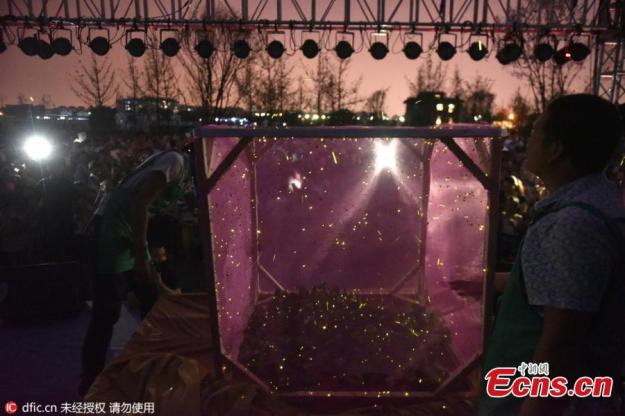
By all reports, Chinese fireflies seem to be increasingly at risk from overharvesting. Last week, North First Park in Chengdu, China captured and released 100,000 fireflies to entertain visitors. The story, reported by Mao Yuting & Wu Xiaochuan in the Taiwanese  press, is translated below:

Chengdu park releases 100,000 fireflies: Expert says all will die within the week

“On the evening of June 25th, a firefly release event attracted many visitors to Chengdu North First Park. According to the event host, a total of 100,000 fireflies were released. At the scene, workers opened up a large glass box and fireflies flew out in unison, inciting great excitement among spectators. Some fireflies flew up, covering an area of the night sky with flickering green stars; some landed on the ground, where several children stooped to pick them up. More than a few spectators caught fireflies mid-flight and put them in bottles.

The following day, Director Zhao Li of the Huaxi Insectarium expressed his firm disapproval. According to the director, all of the 100,000 fireflies released will die within three to seven days. Fireflies have highly specific habitat requirements, and are unlikely to survive away from their native environment. Even if overall conditions are good, the new habitat should be tailored to address their needs, and an extended period of acclimation allowed. If nothing is done before the fireflies are released, the death rate will approach 100%.

chengdu ff release

Continue reading

Flashing Fireflies in…Utah

Wait…what? For many years, scientists believed that lightningbug fireflies (the flashy kinds) only lived east of the Rocky Mountains. But now scattered populations of these flashers are popping up in western states, too.

Seth Bybee at Brigham Young University  discovered Pyractomena lightningbugs at several locales in Utah, mainly in wet places around seeps and springs.

Using citizen scientist reports, Dr. Bybee and the Natural History Museum of Utah compiled this map showing 100+ locations all over Utah where folks have spotted lightningbugs. Flashing fireflies also been reported from Great Basin National Park in Nevada.

So if you’re living or traveling out West, keep your eyes wide open for fireflies and send in your reports here!


Launching the Firefly Genome!

Thrilled to announce that the Firefly Genome Project will soon start deciphering the genetic blueprint of the U.S. Big Dipper firefly, Photinus pyralis!

More than 80 people from many different countries helped us crowdfund this path-breaking scientific initiative by contributing & by spreading the word – thanks to all!

And another great thing is that we’ll be providing open access to the DNA sequence data, which we hope will inspire lots more exciting firefly science in the future.

You can learn more about the goals & progress of this collaborative project at Experiment.com.

Loving Chinese fireflies to death?

china valentines day.jpg

For the past few years, online sales of live fireflies have skyrocketed just before Qixi, the Chinese equivalent of Valentine’s Day. For many young Chinese, a jar of fireflies looks like a brilliant way to say “I love you.”

According to reports, more than 10 million Chinese fireflies were sold online in 2015, a tenfold rise compared with the same period the previous year. Costing a few hundred yuan, each  container holds 30-50 fireflies, most likely collected from the wild. But it makes a short-lived gift, because once they’re in captivity these fireflies will only survive a few days. Continue reading

Japanese Fireflies: Harvested for Beauty

While fireflies were harvested for their light-producing chemicals in the U.S., in Japan fireflies were harvested for their beauty.catching fireflies print In Japan’s Shiga Prefecture, many firefly merchants set up shop very summer from the early 1800s through the 1920s. They hired hunters to collect genji-botaru (Luciola cruciata) fireflies, which they sold to clients in Osaka, Tokyo, and Kyoto. Hotel and restaurant owners released these wild-caught fireflies into their gardens, where customers would pay to  enjoy their luminous beauty.

By some estimates, firefly vendors sold three million wild insects to city folk every June and July. Soon, firefly populations began to dwindle due to over-collecting, river pollution, and habitat loss.

Silent Sparks describes the ecohistory of Japanese and U.S. fireflies, including some successful conservation efforts.